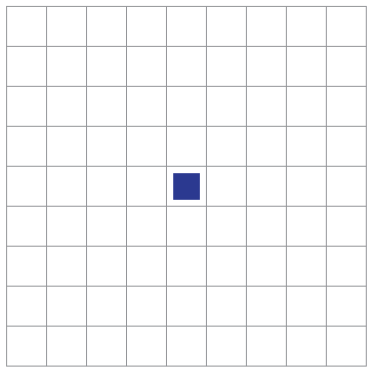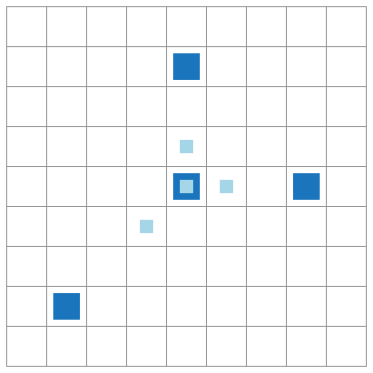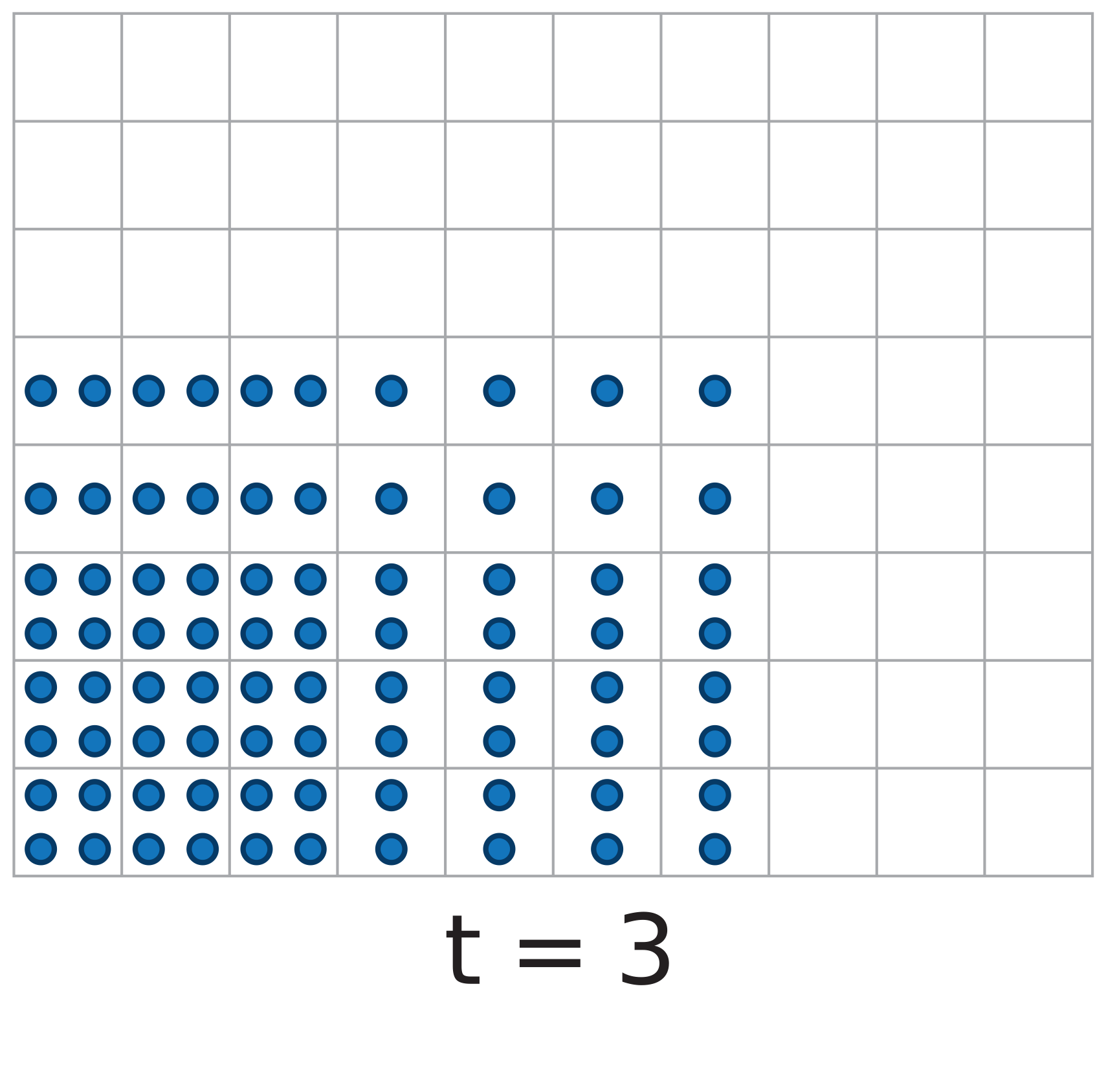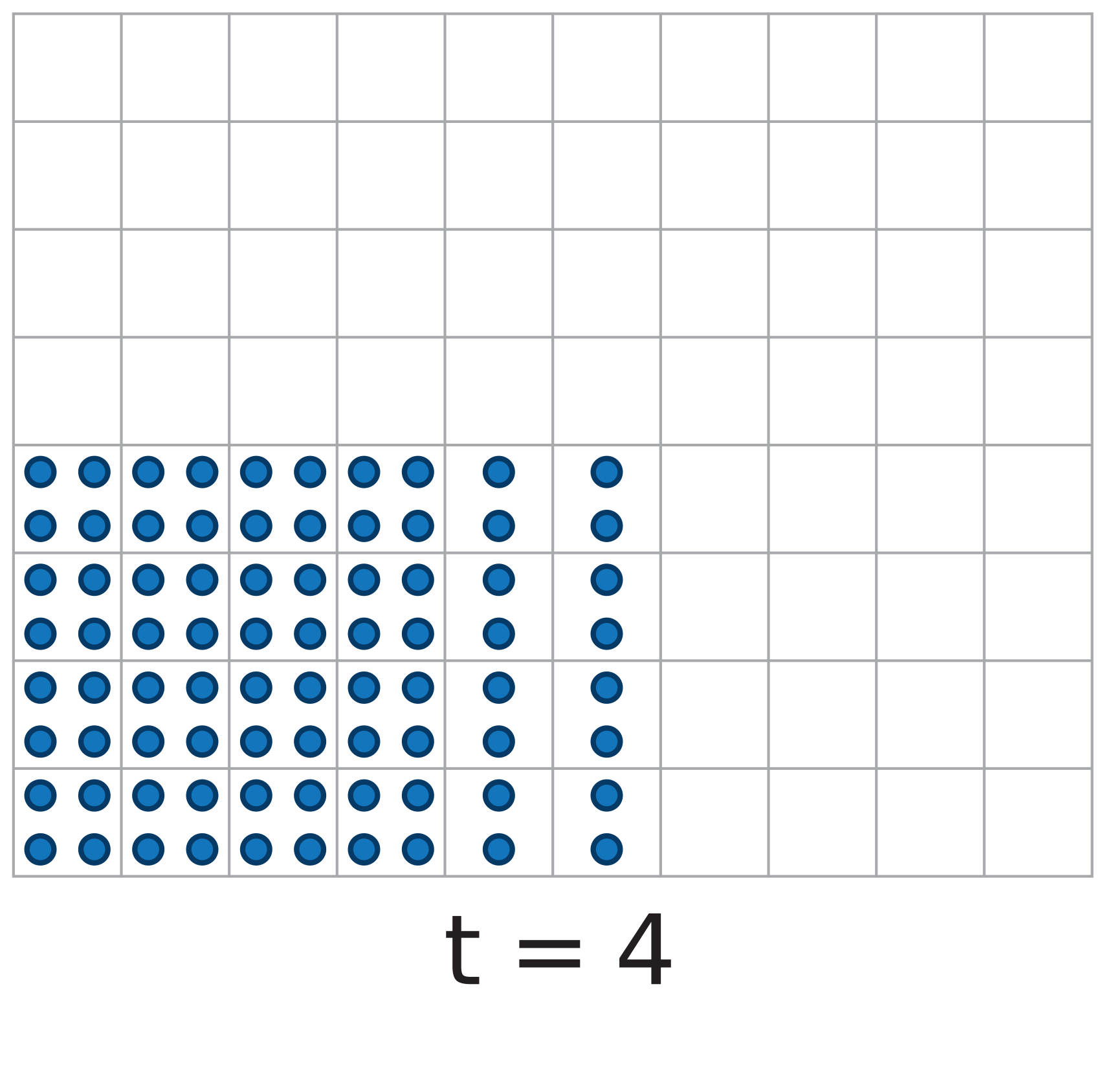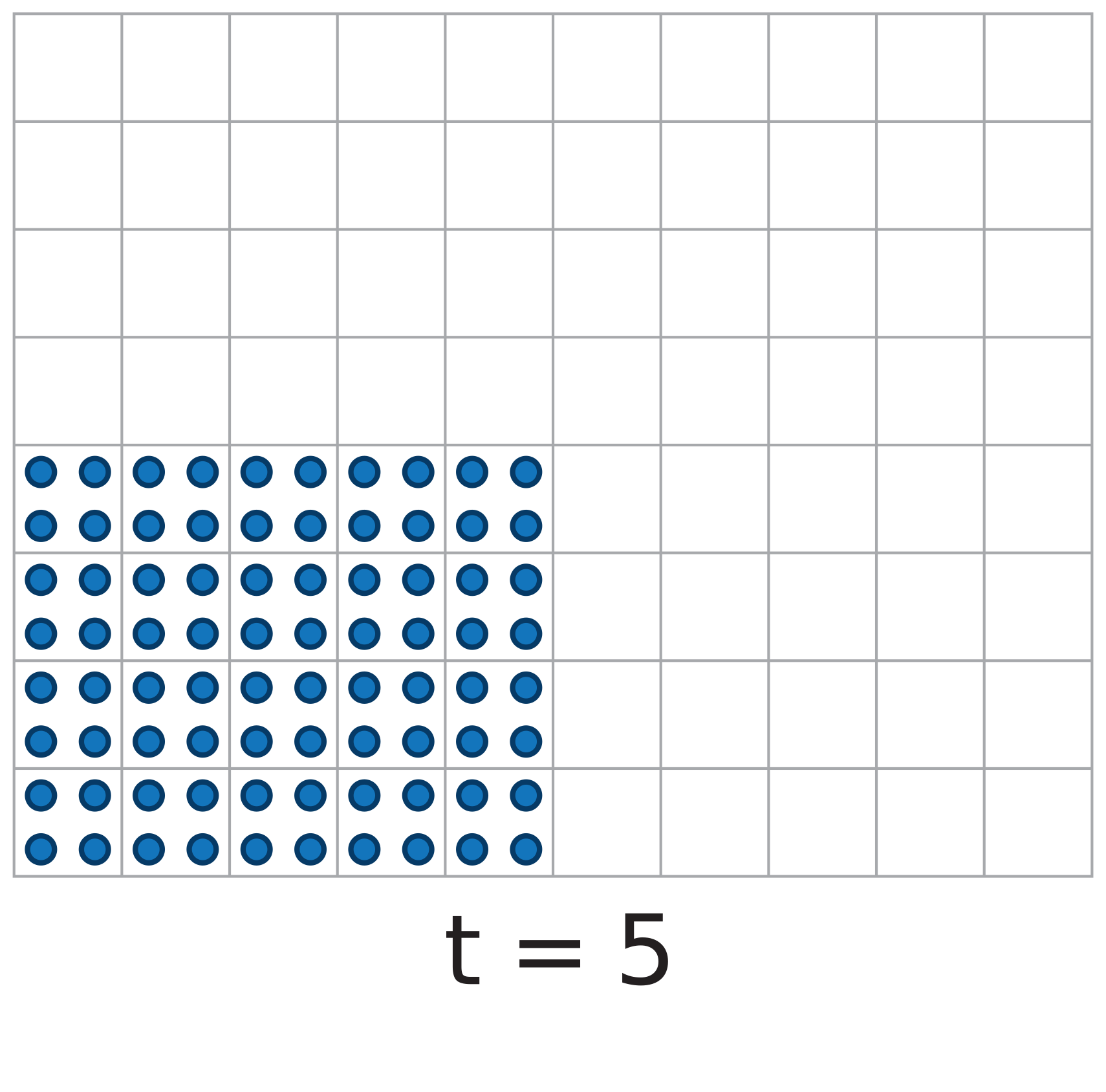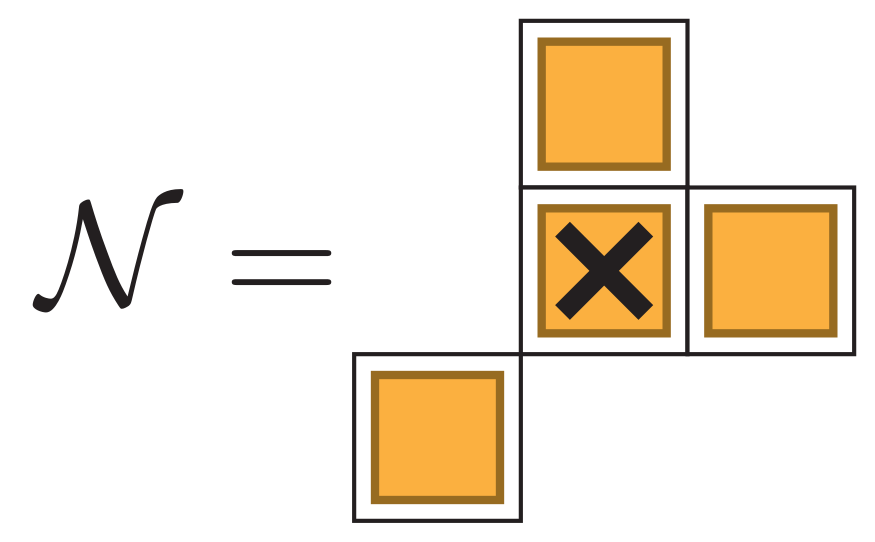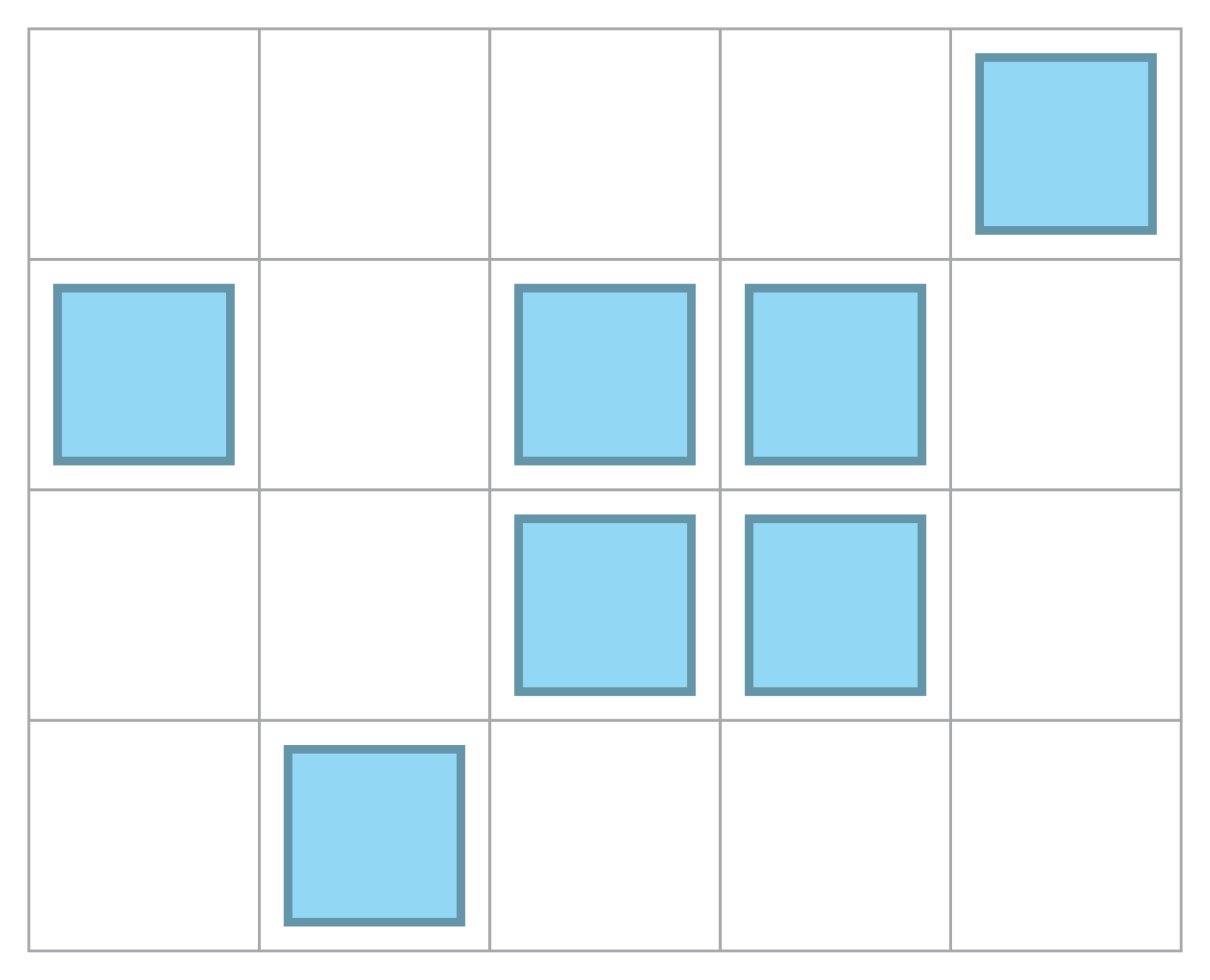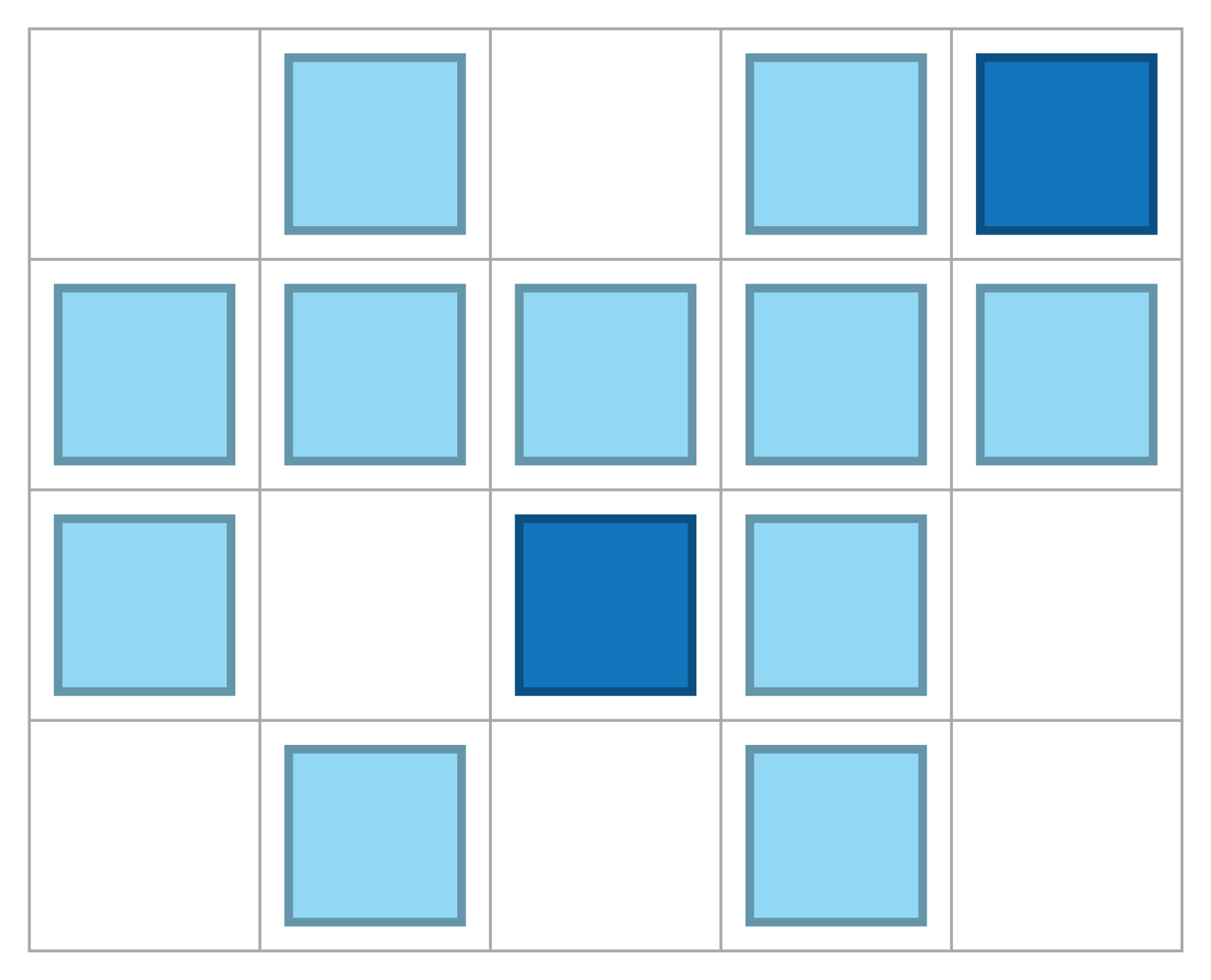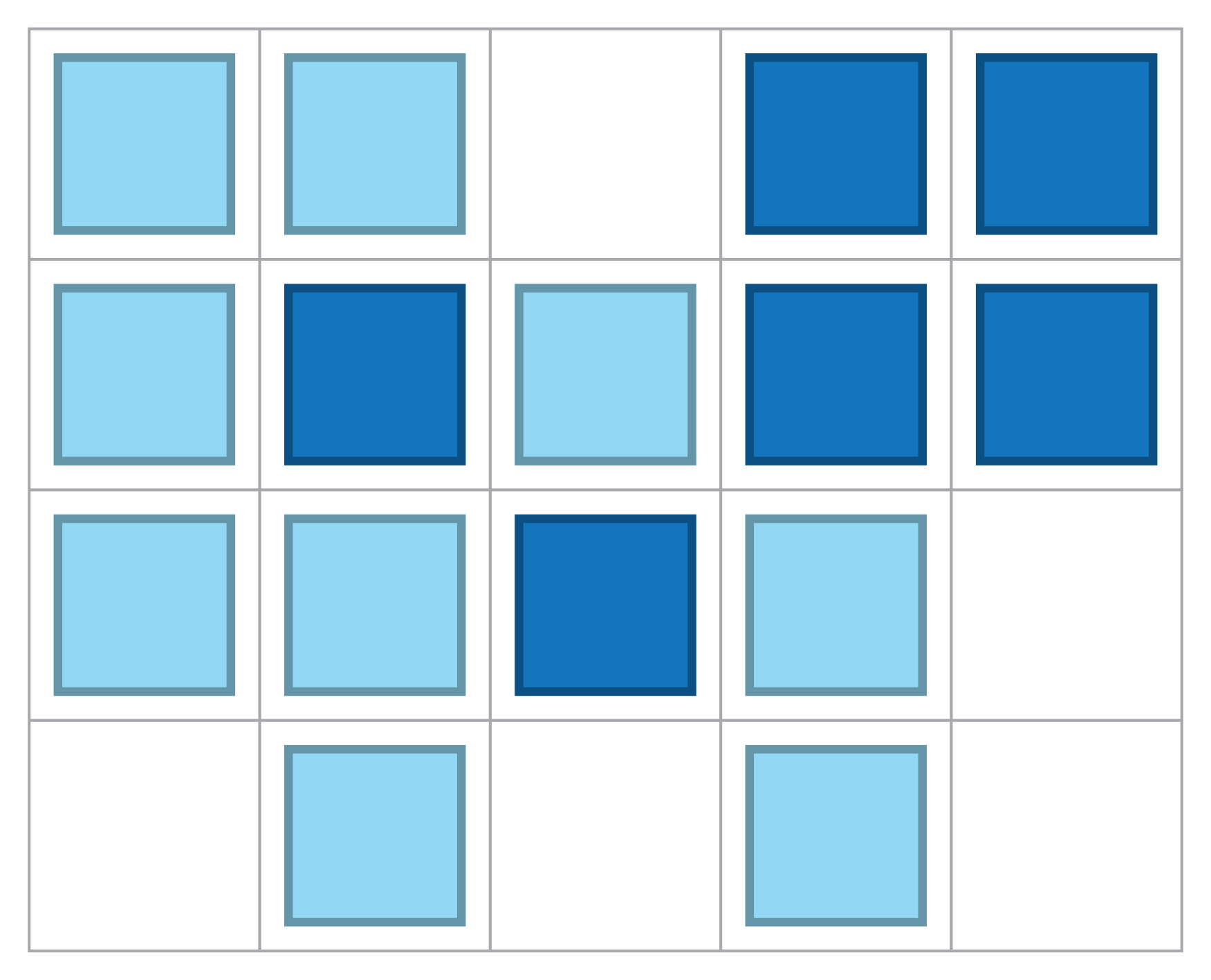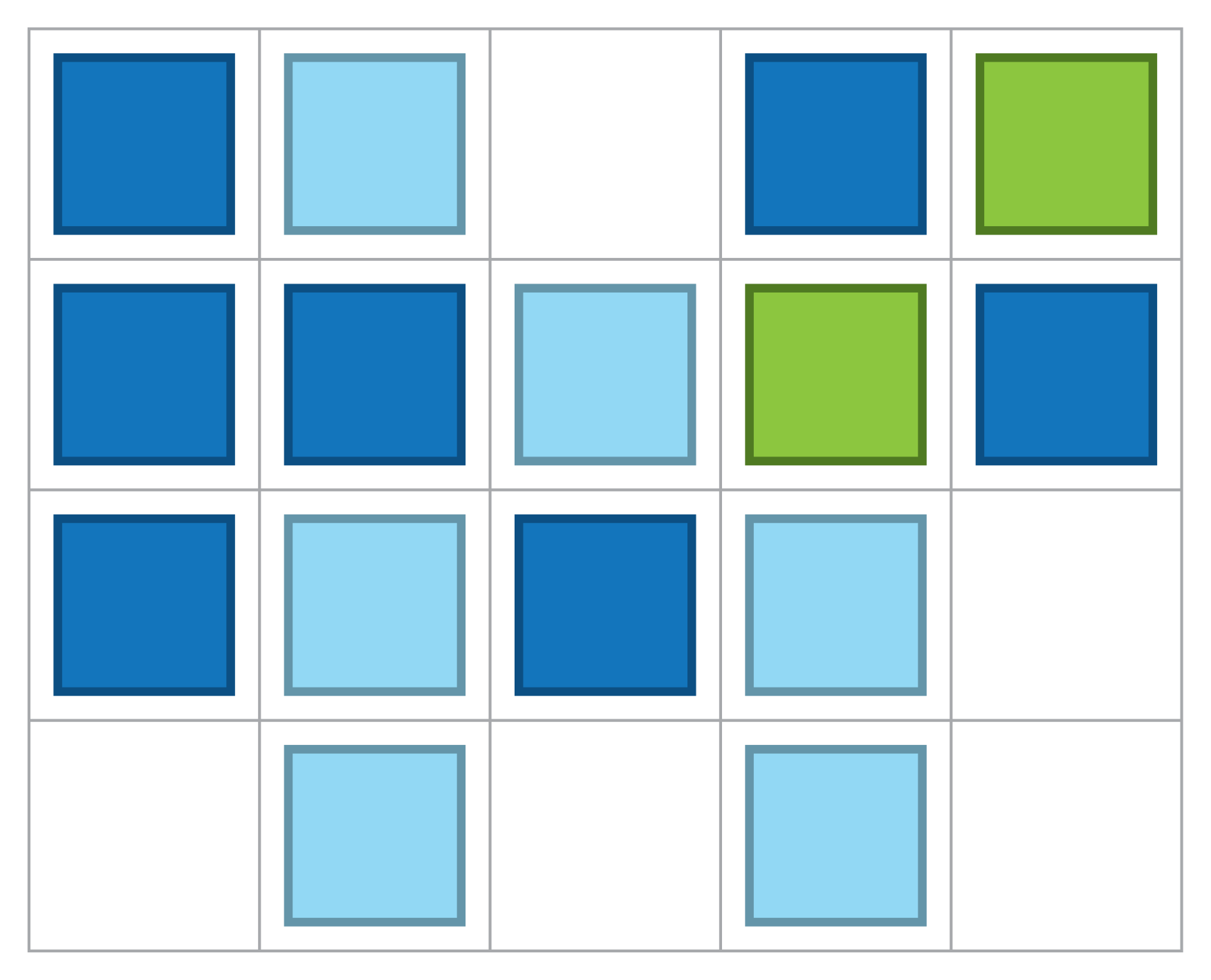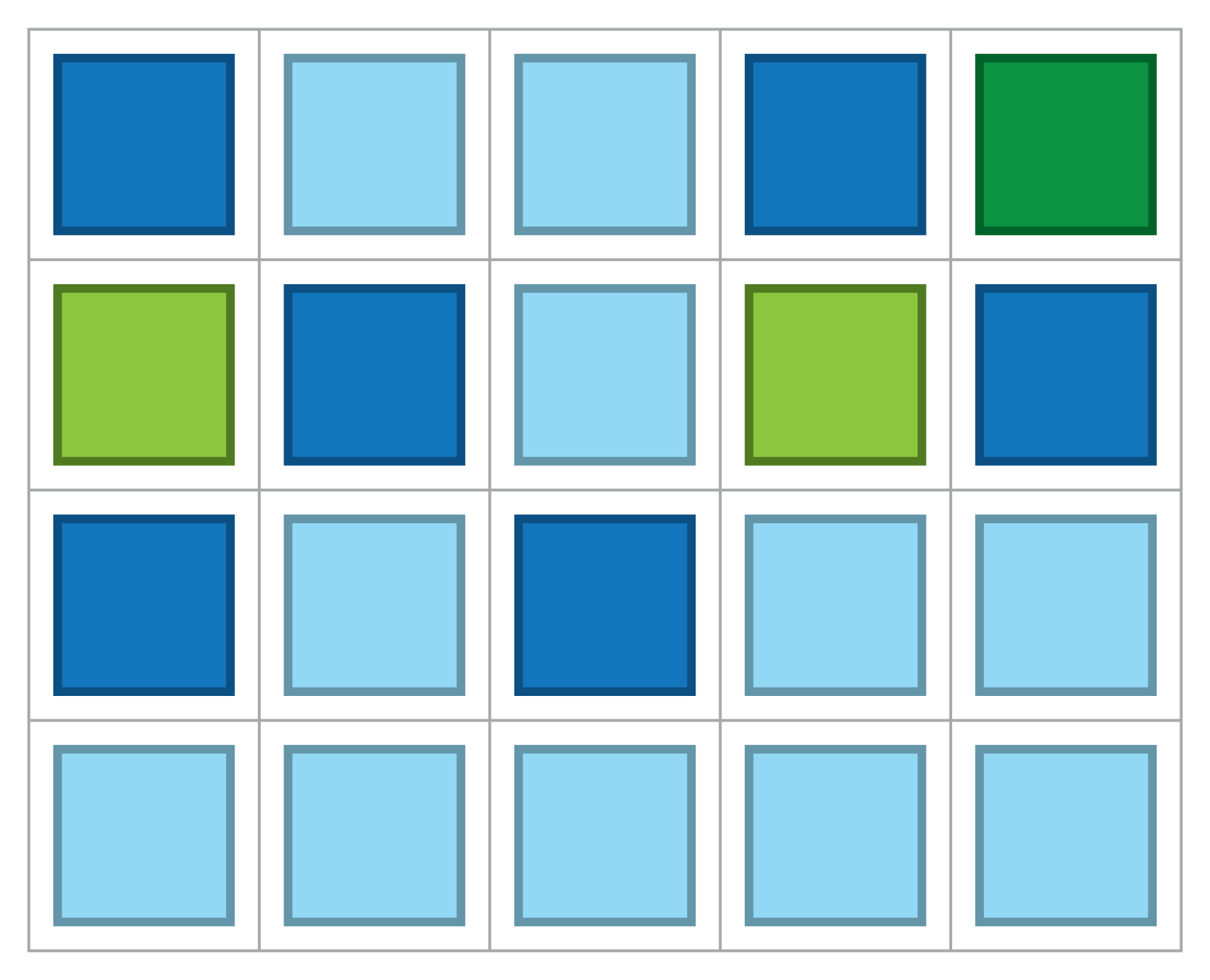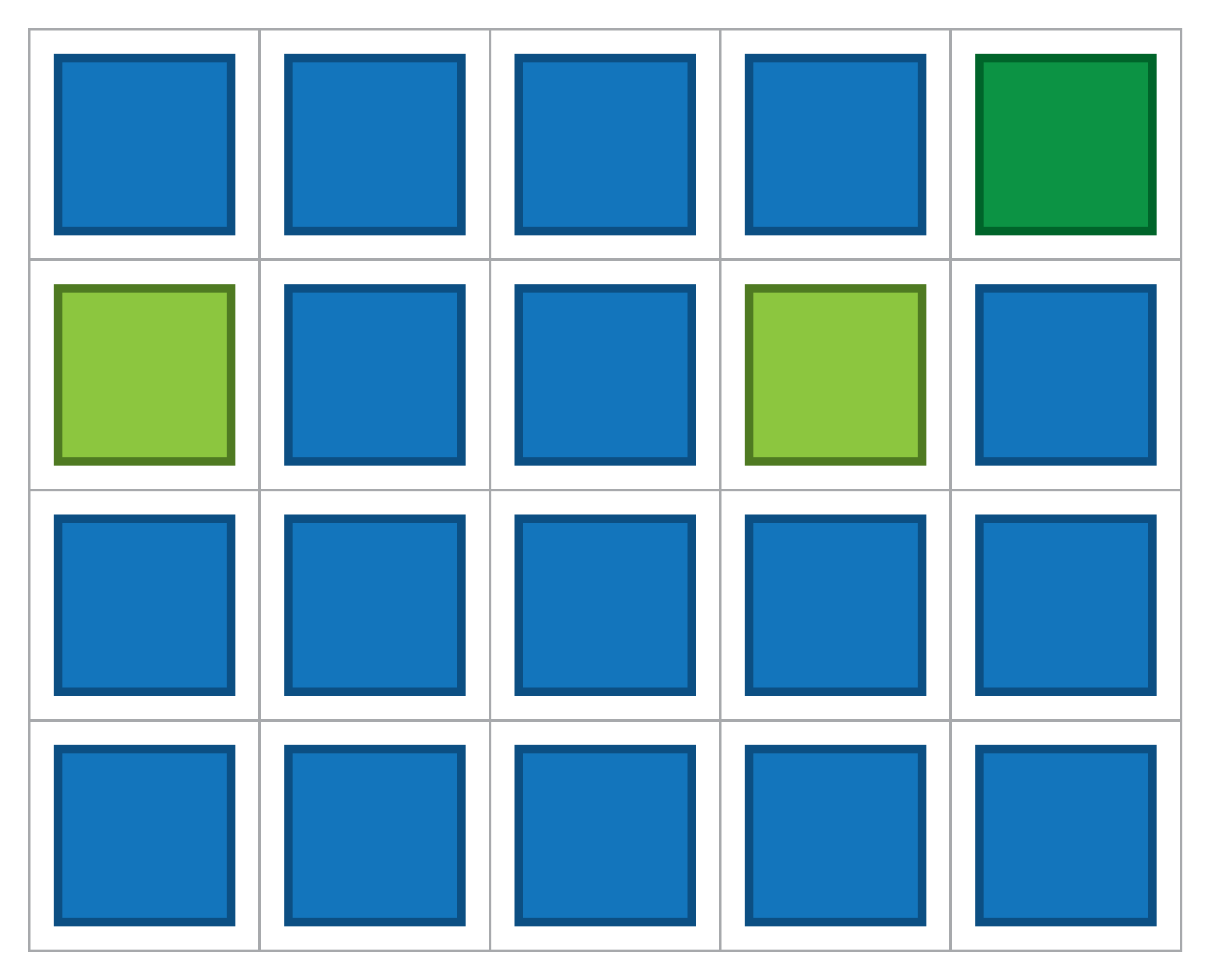
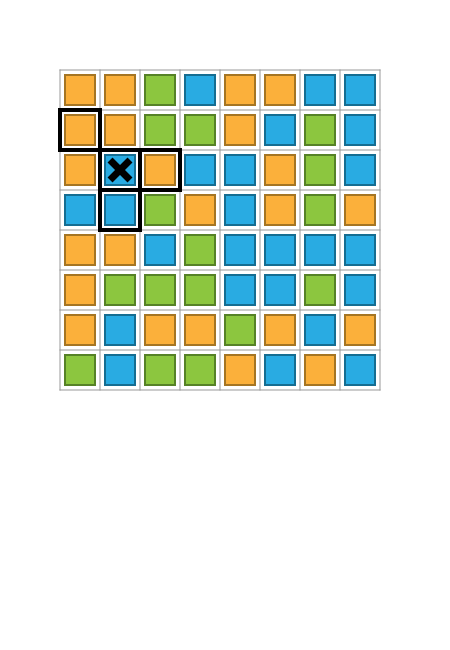
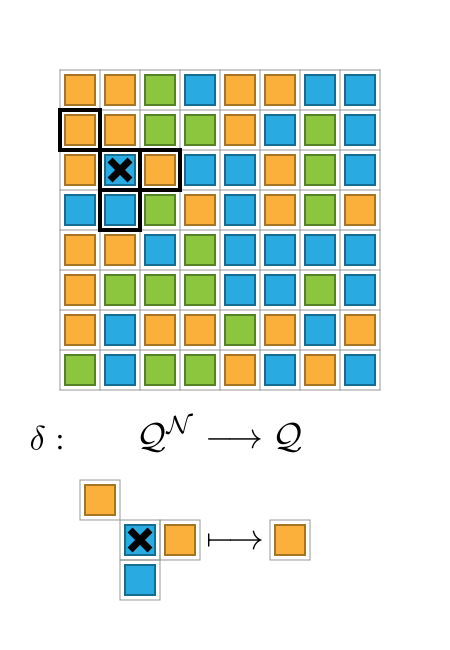
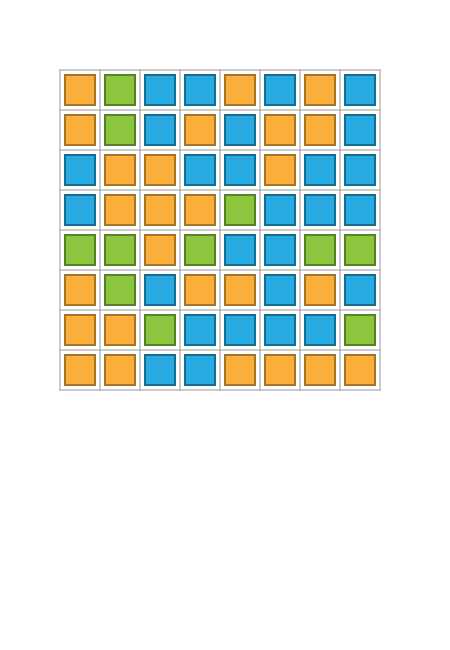
2-dimensional cellular automata (2DCA) \(\ACA = (\ACQ, V, \delta)\) :
global function \(\Delta: \ACQ^{\ZZ^2}\rightarrow \ACQ^{\ZZ^2}\)
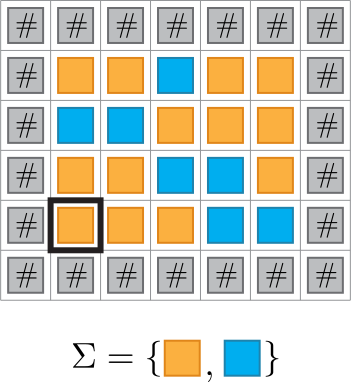
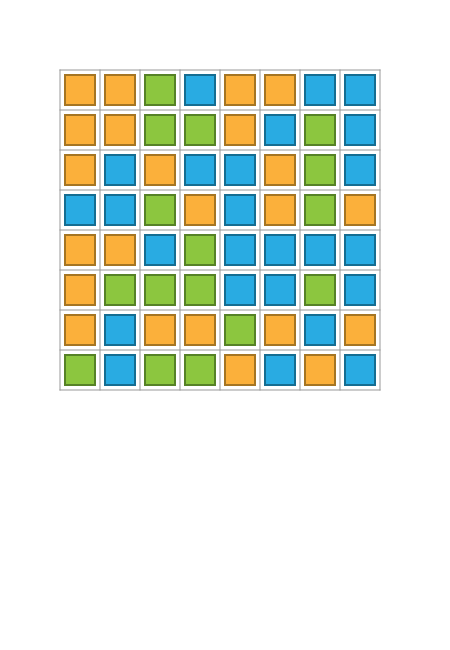
Languages of rectangular pictures in\[\Sigma^{**} = \bigcup_{n, m} \Sigma^{(n, m)}\]
We consider 2DCA such that
Time complexity is as expected\[f: \NN^2 \rightarrow \NN\]
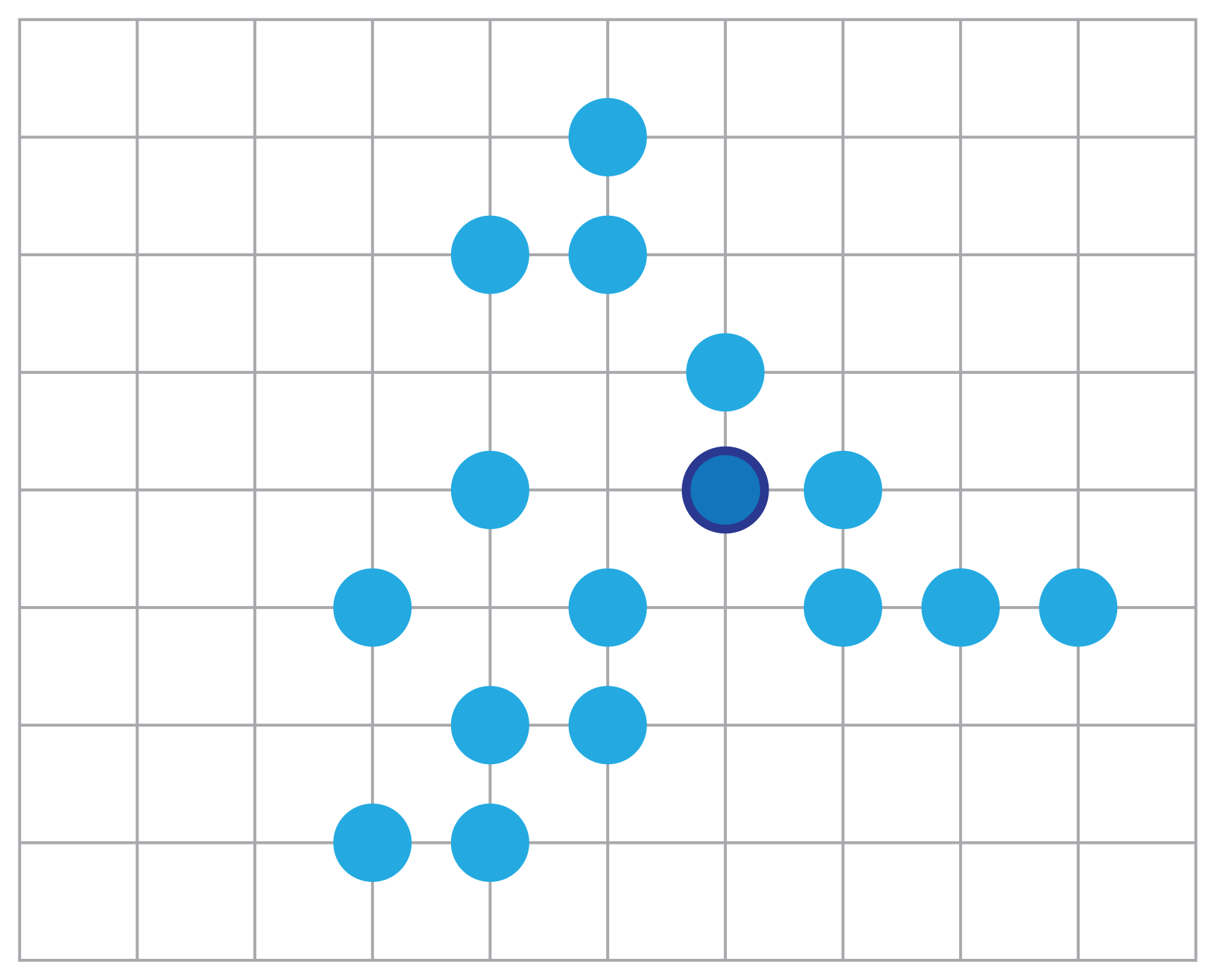
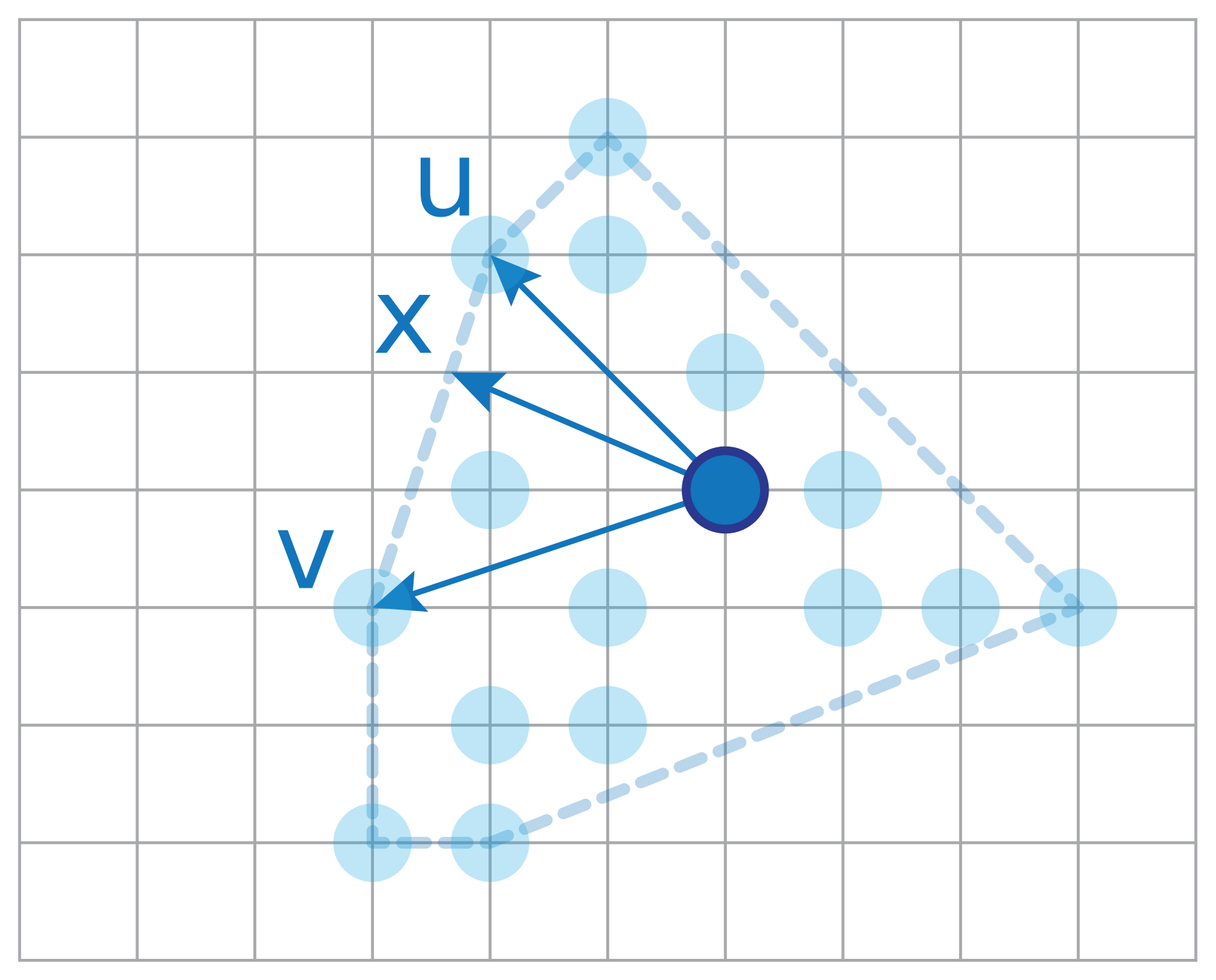
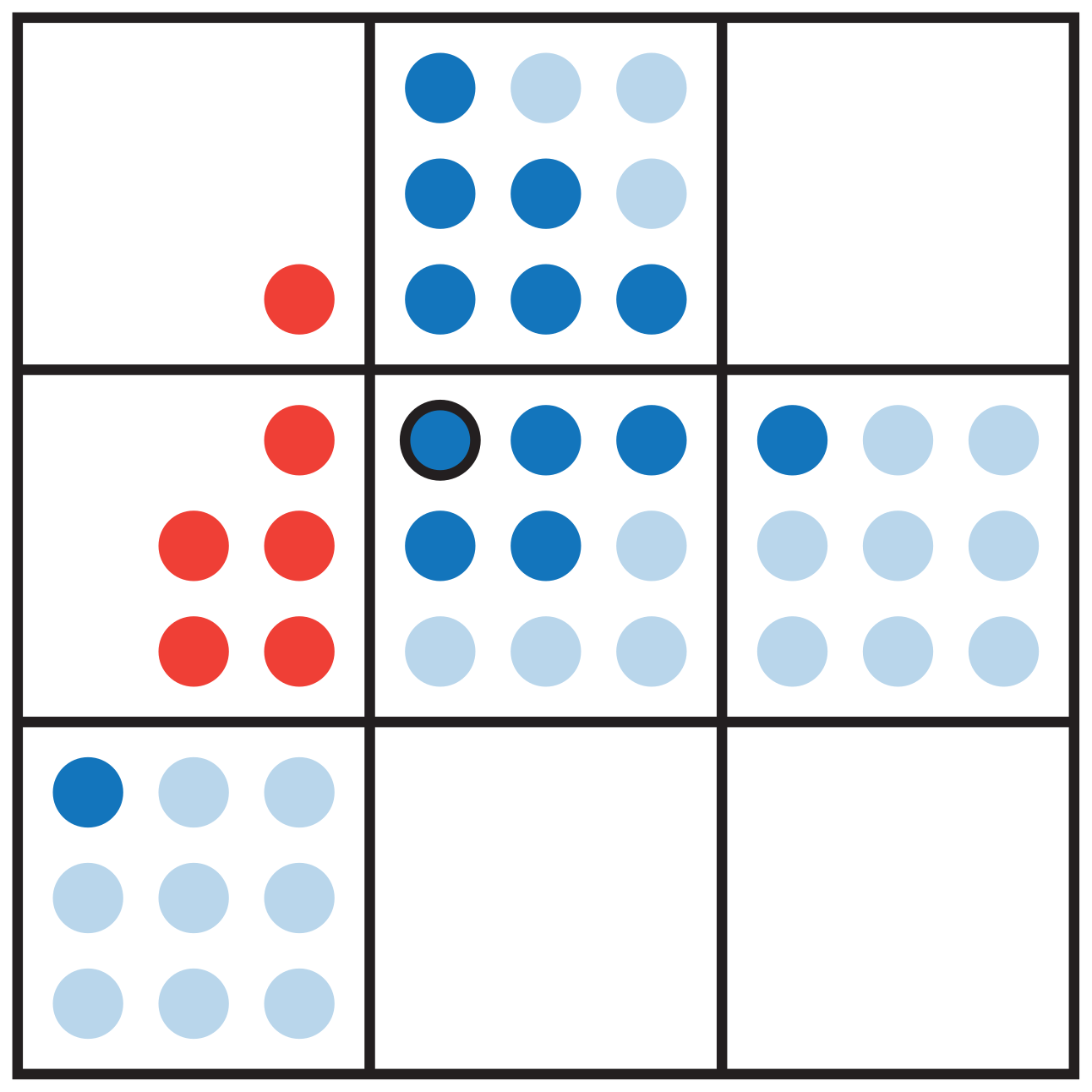
\(V^n\) is the set of cells that the origin can see in \(n\) time steps.
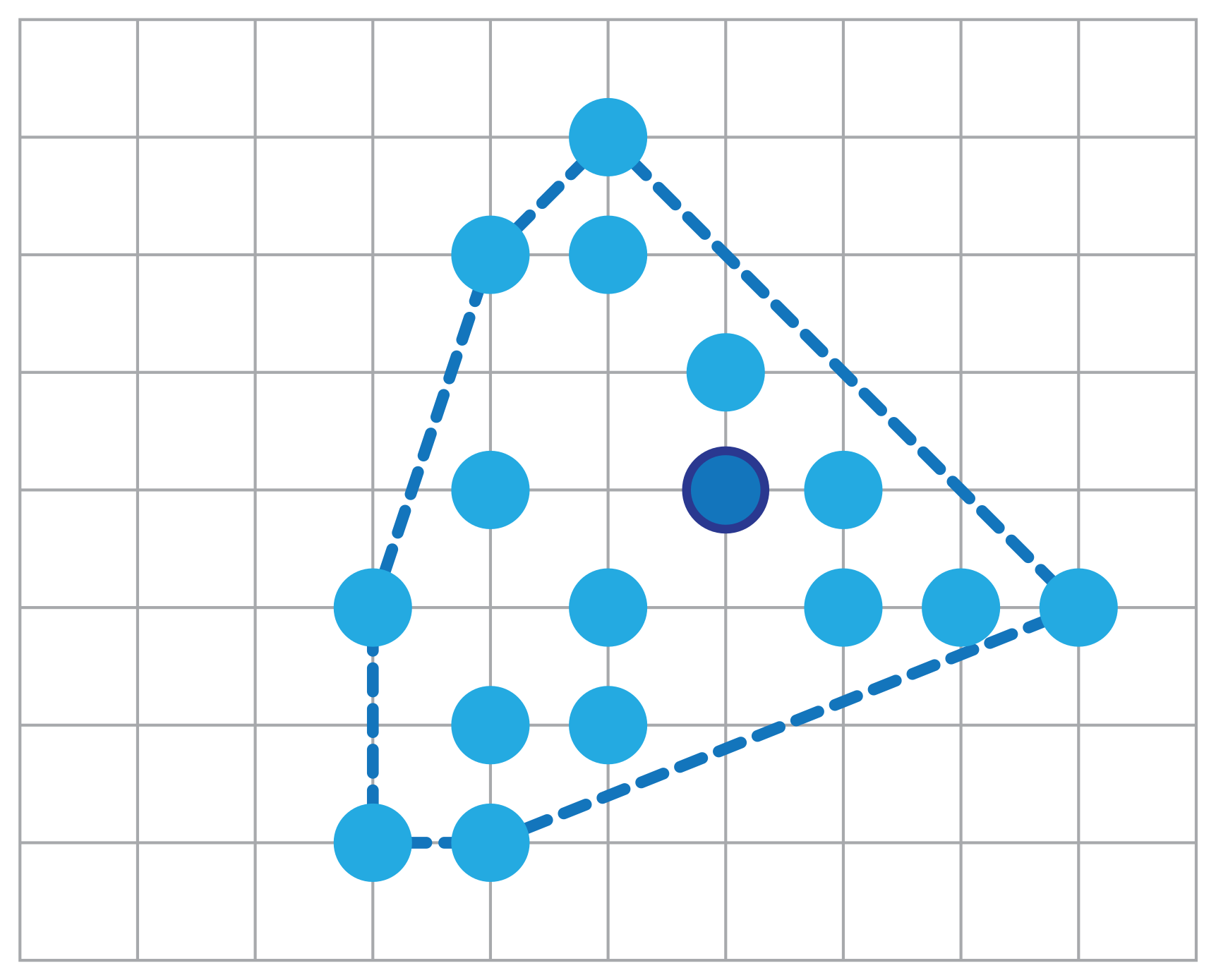
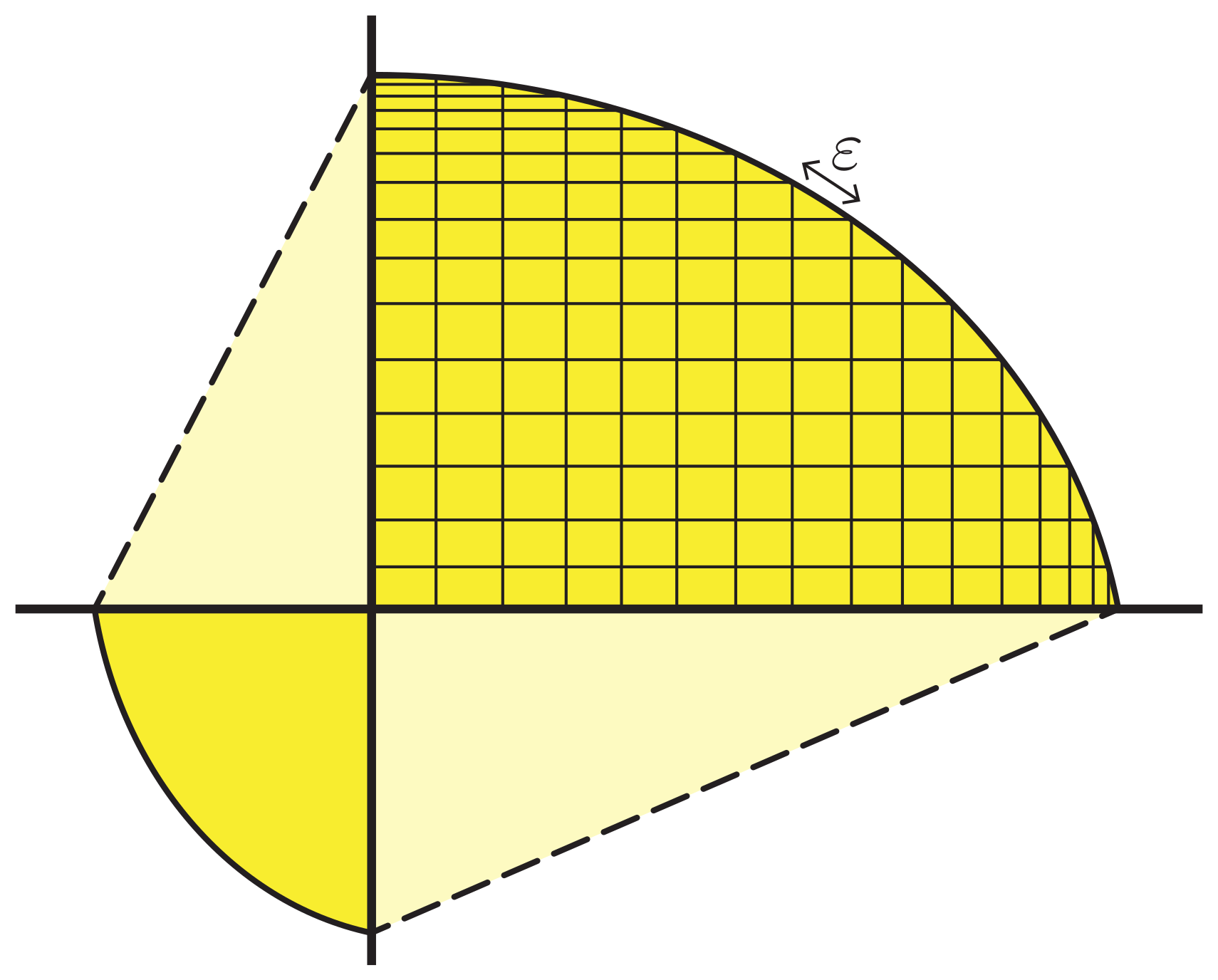
The convex hull of a neighborhood \(V\) is the smallest convex polygon (in \(\RR^2\)) containing \(V\).
The vertices of the convex hull are elements of \(V\)
If a neighborhood is complete, its convex hull contains an open ball around the origin.
The real time function corresponding to a given neighborhood \(V\) is defined as\begin{align*} \TR_V: \NN^2 &\rightarrow \NN\\ (n, m) &\mapsto \min\{t \ |\ n\times m\subseteq V^t\} \end{align*}
For any \(\epsilon > 0\), any language recognized in time \((\TR + f)\) by a 2DCA working on the Mooreneighborhood can be recognized in time \[\TR + \lceil\epsilon f\rceil\]
Proof :
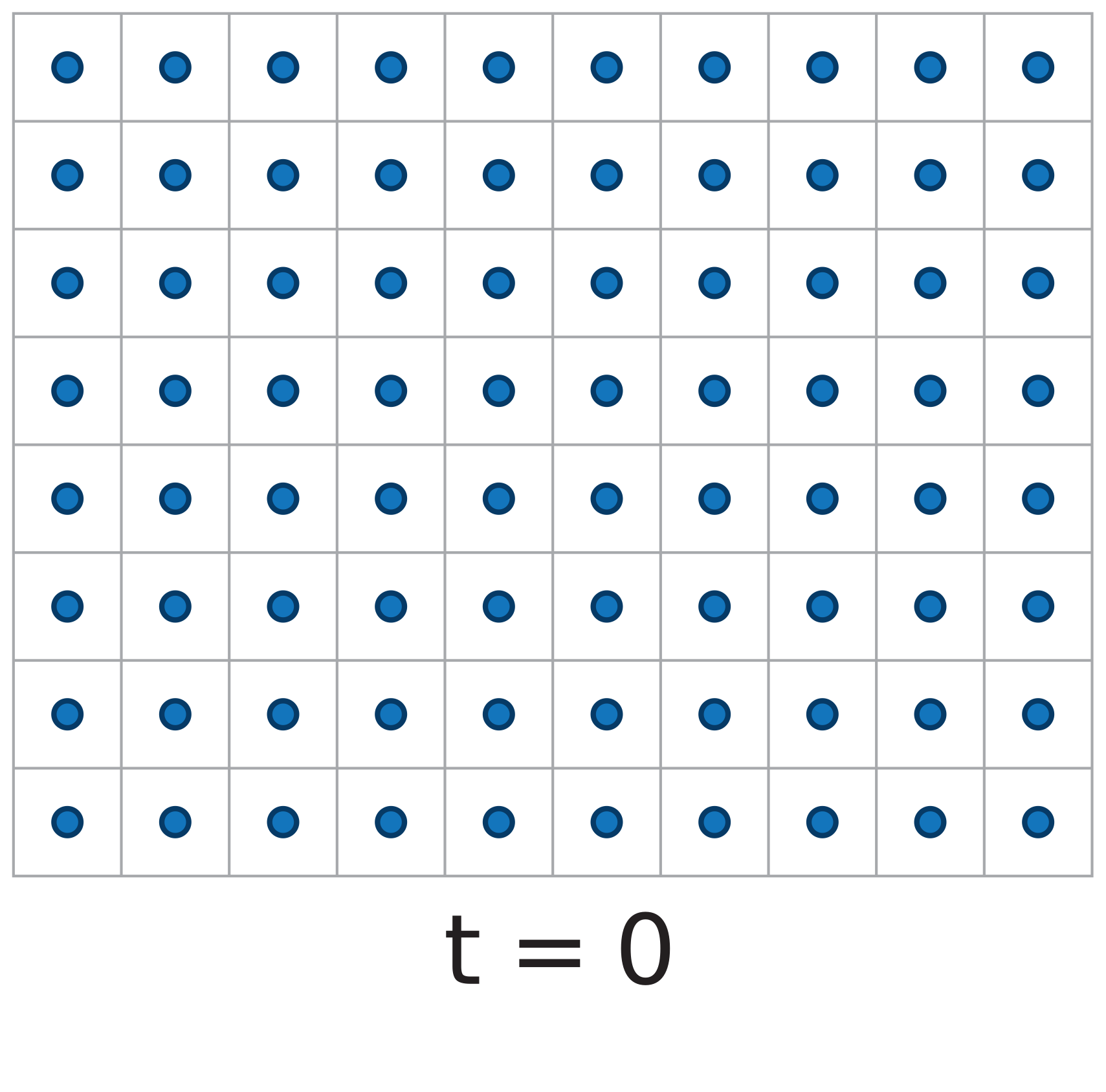
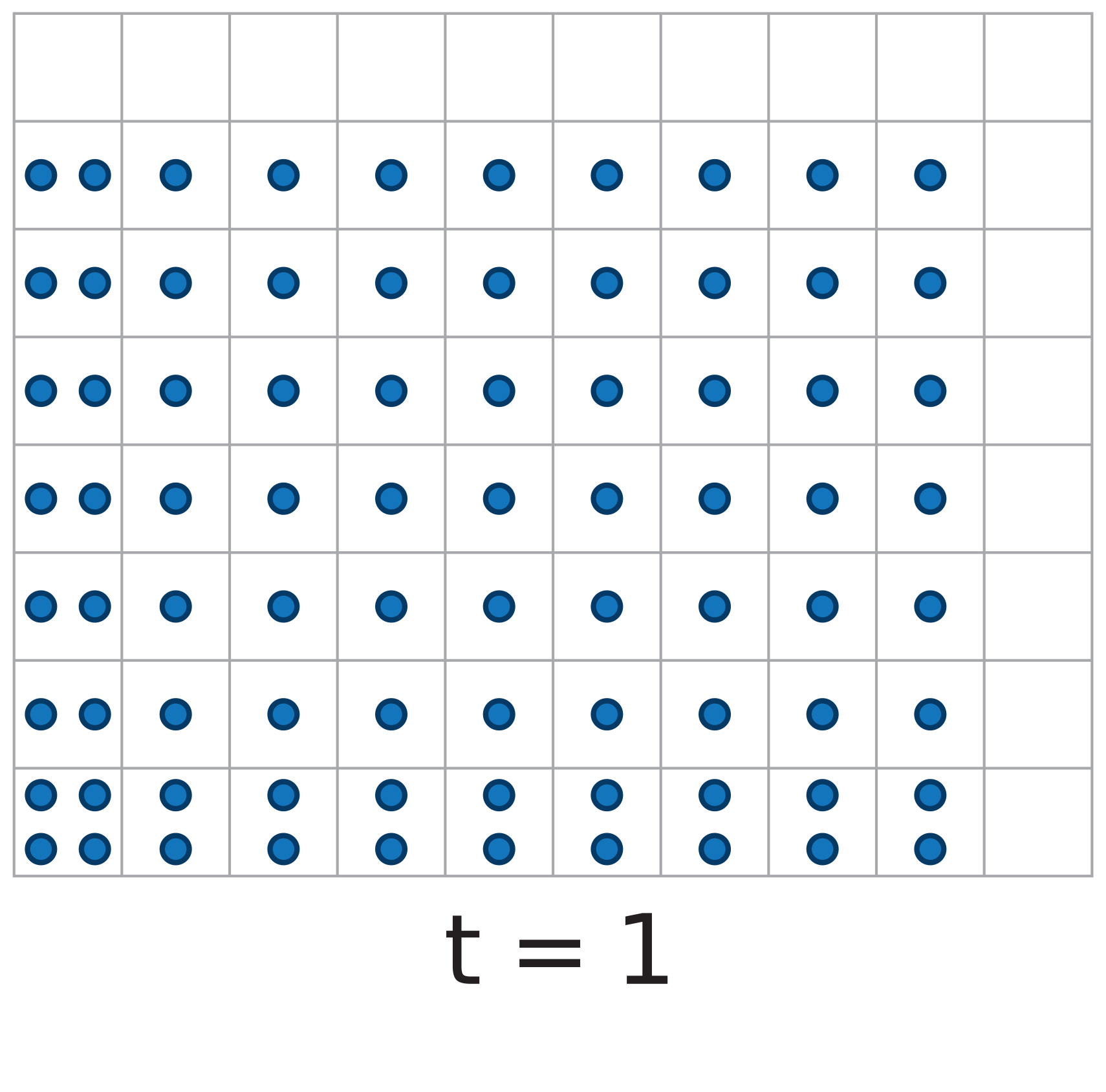
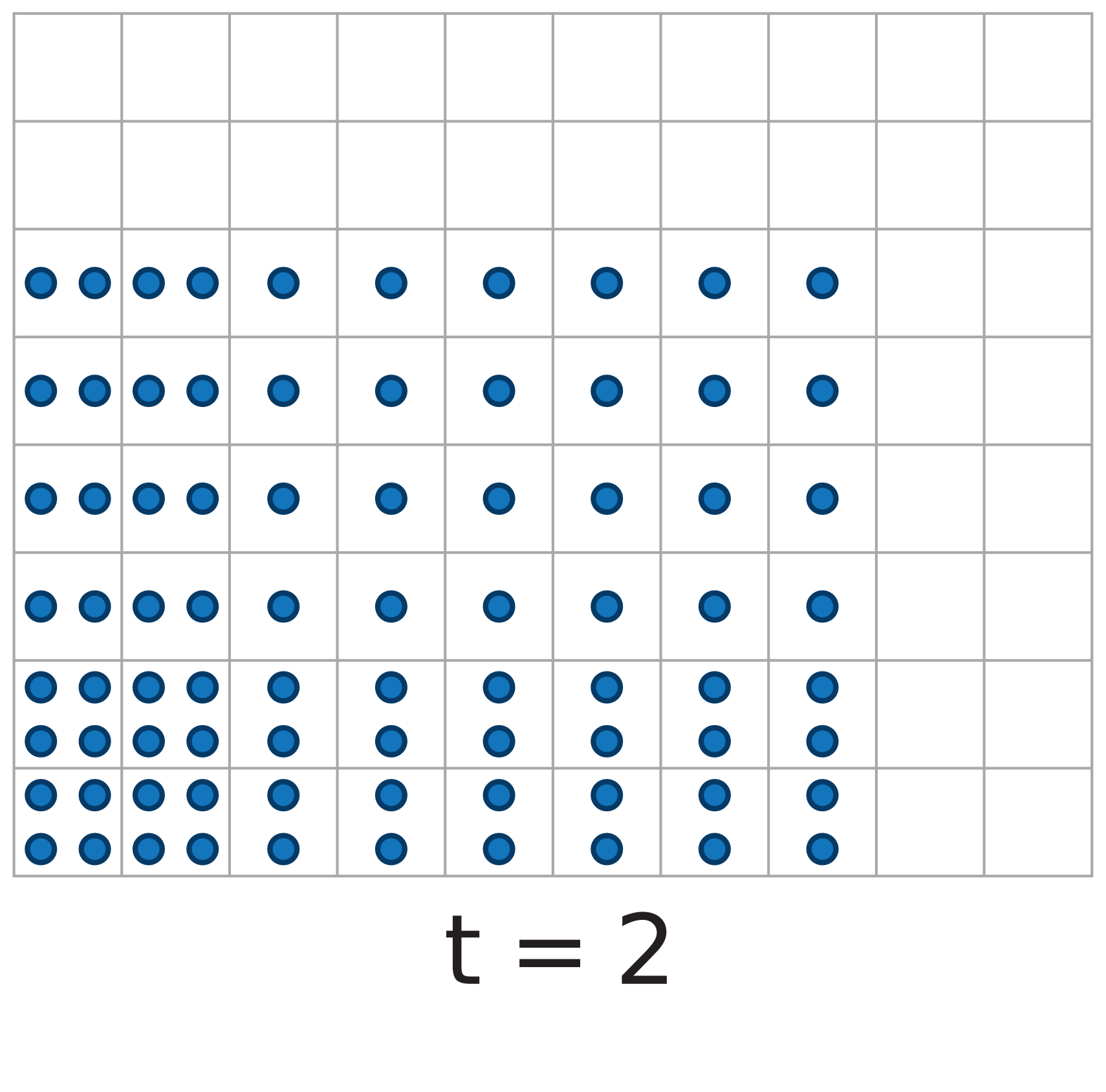
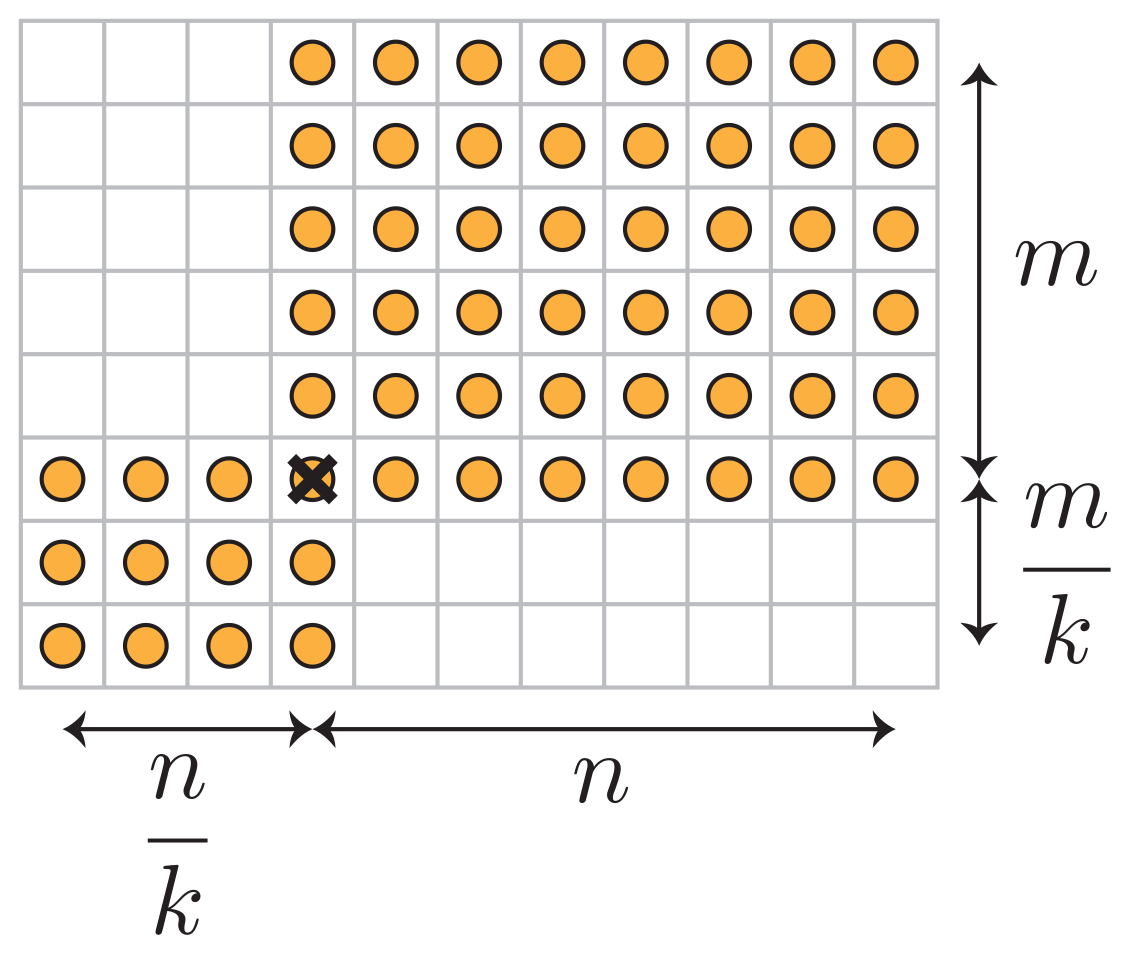
A cell of the new automaton can contain up to \(k^2\) states of the original CA.
Proof by induction
Problem : cells do not complete compression at the same time
Solution : compute new states as soon as relevant information is available.
All cells are at least as fast as if they all started at the same time as the last.
Proof :
Problem : After compression, a cell sees \(kV + c\) for the information it holds, not \(V^k + c\)
Solution : Gather more information !
At each step, cells can compute \(k\) steps of the original automaton for each of the information they hold.
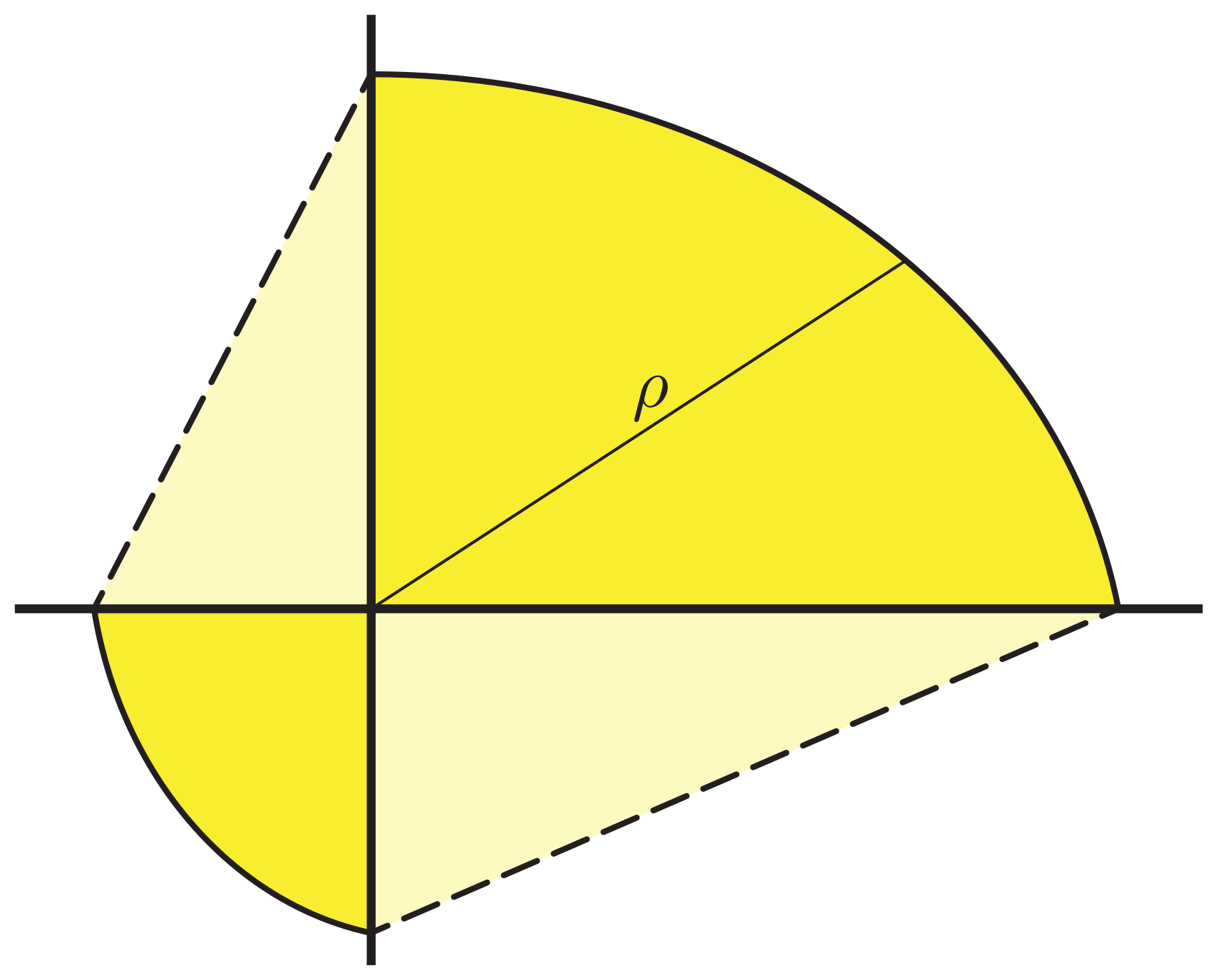
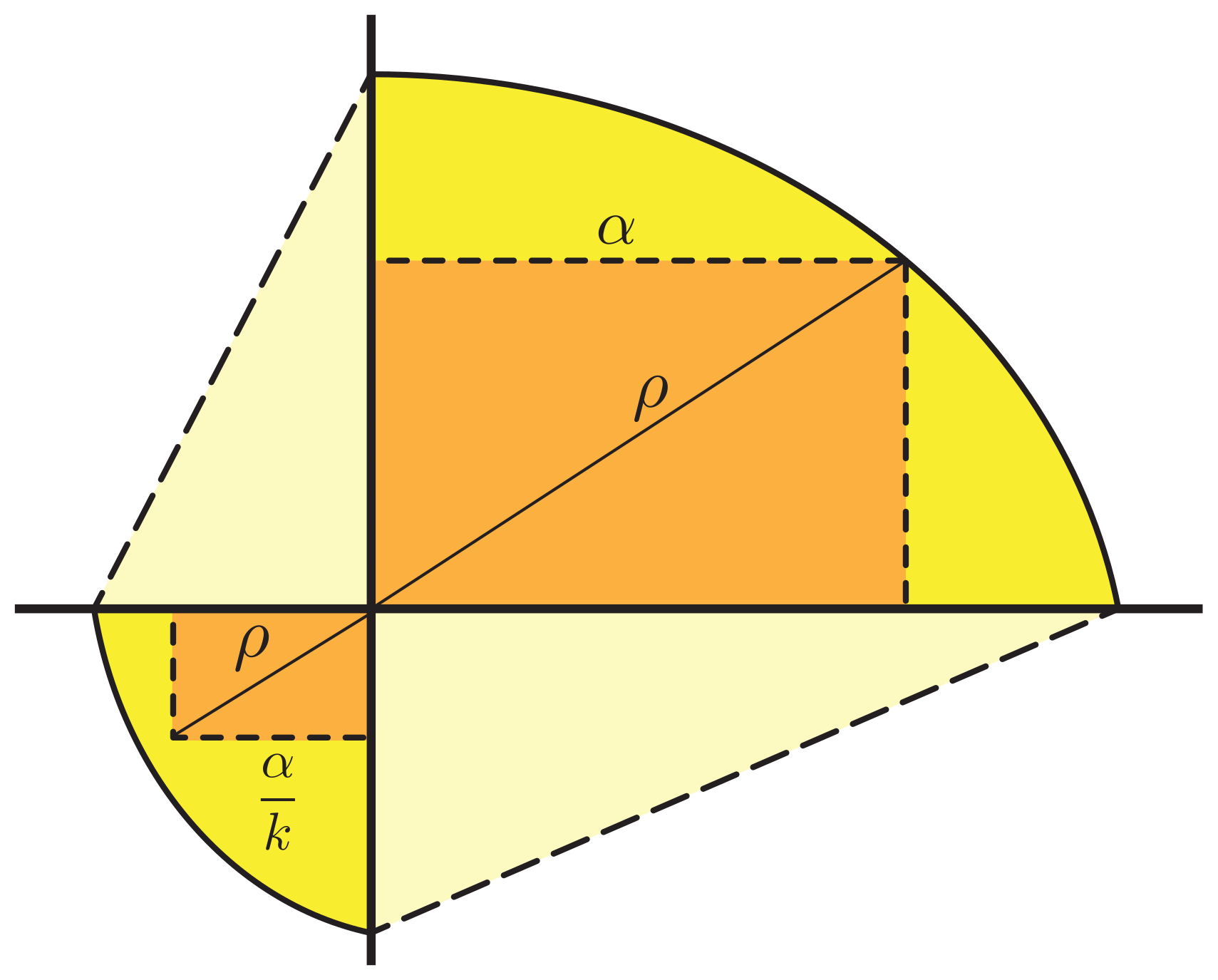
Difficulty : Optimal path towards the origin depends on the ratio \(\frac m n\)
Idea :
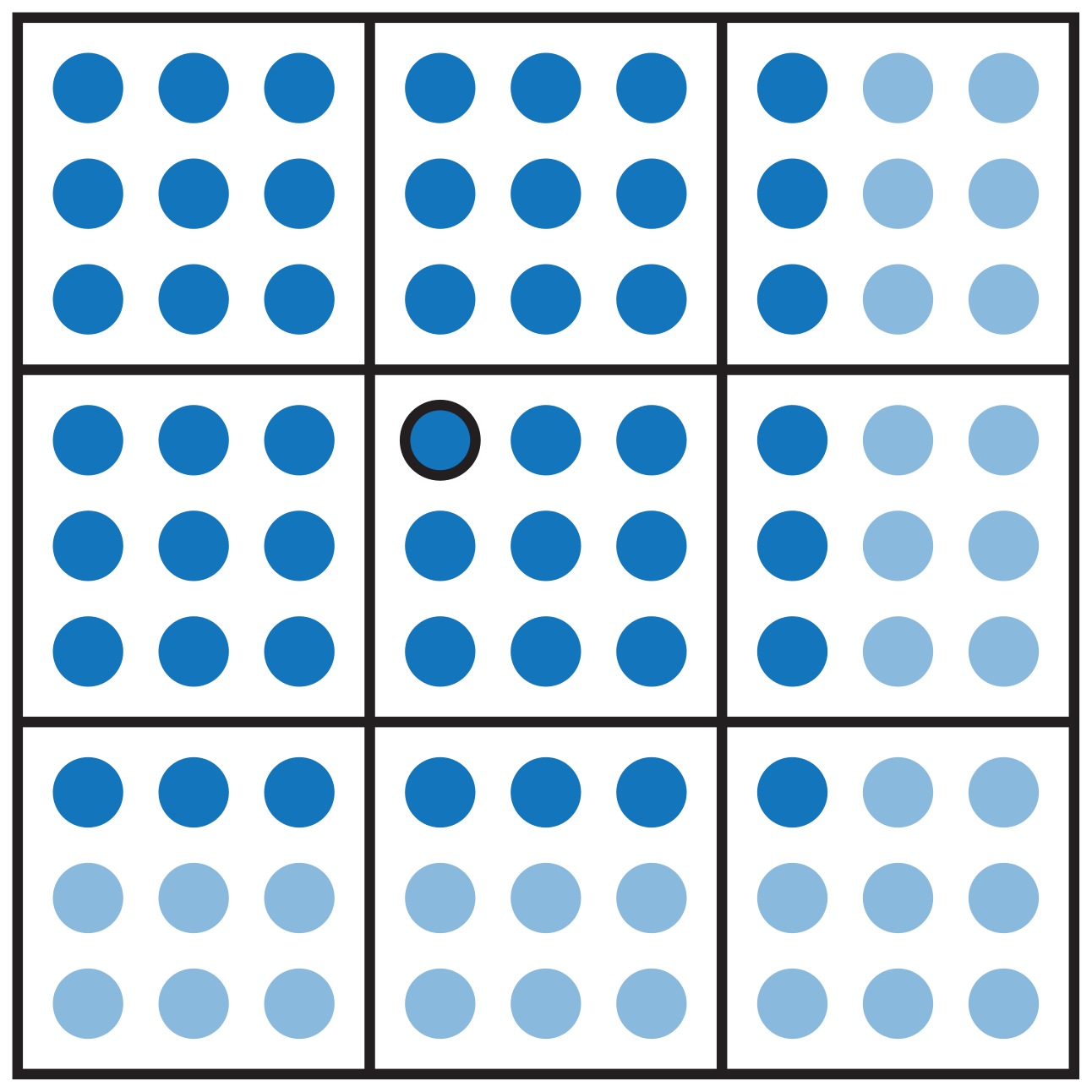
Defintion: see picture.
A Moore-like neighborhood can perform a compression of the input by a factor \((k+1)\) in time\[\frac{k}{k+1}\TR\]
Proof : Same as for the Moore neighborhood
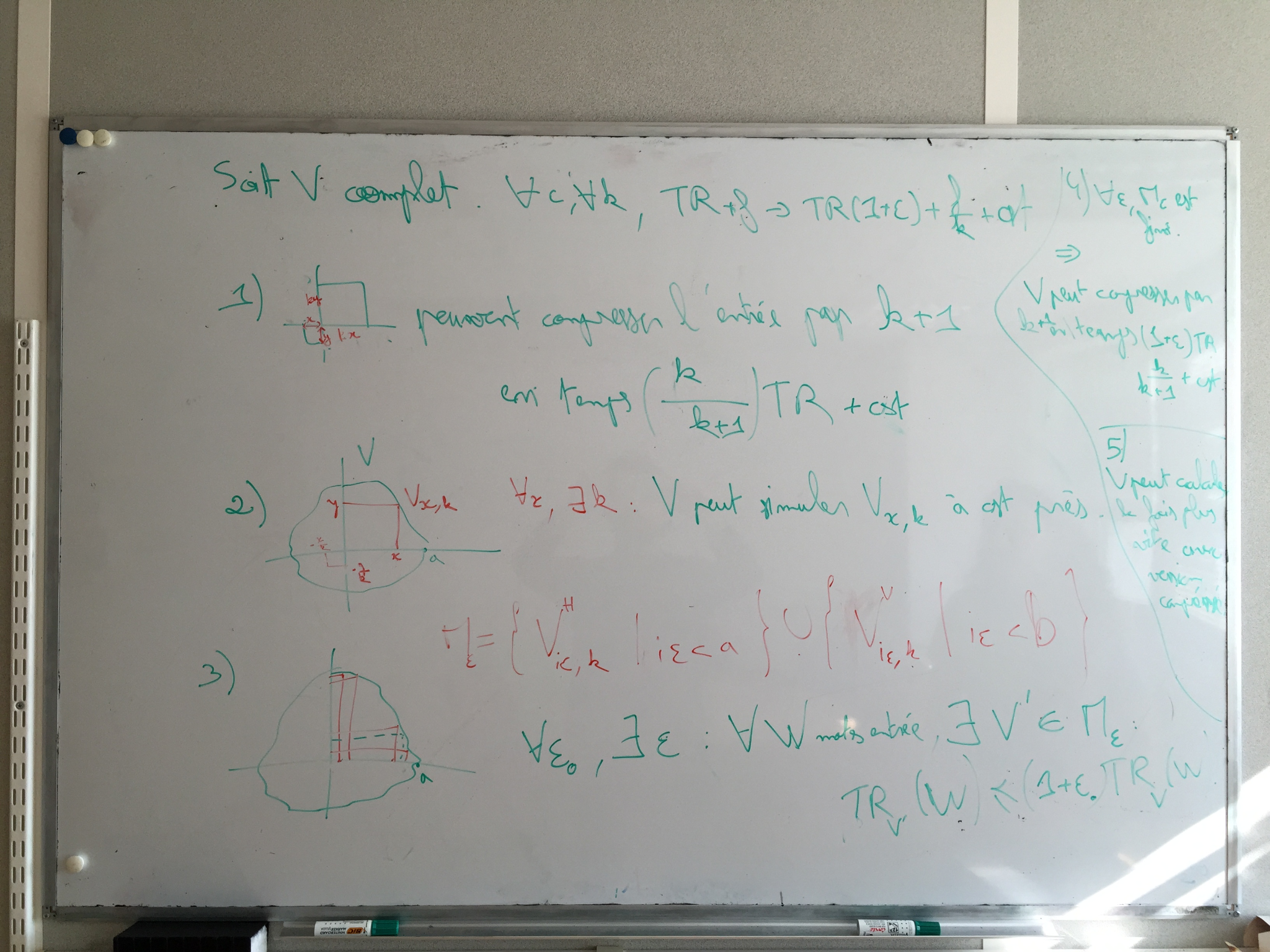
For input words with a specific ratio \(\rho\), the complete neighborhood \(V\) can behave as a Moore-likeneighborhood \(V'\)
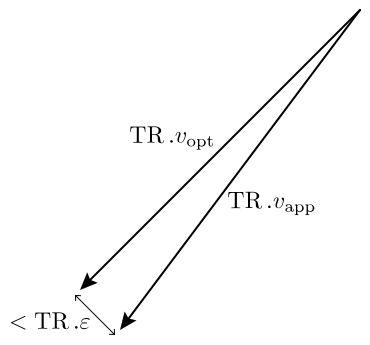
For any input picture, there is \(V'\in M_\epsilon\) that can compress it by \(k+1\) in time\[(1+\epsilon')\frac{k}{k+1}\TR_{V}\]